
Every day across the world, thousands of beginner forex traders celebrate huge profits on demo accounts — only to watch their confidence collapse the moment they switch to real money trading.
For many beginners, this painful experience becomes the moment they start believing forex is fake.
But the truth is far deeper than that.
A demo account is designed to simulate the real forex market using virtual money. Prices move like the live market, trades execute almost the same way, and beginners can practice strategies without financial risk.
At first, everything feels easy.

Traders become more confident, take bigger risks, and hold trades without fear because no real money is involved. Losing trades feels harmless since nothing valuable is actually being lost.
This creates a dangerous illusion of skill.
But once real money enters, everything changes instantly.
Fear begins to appear. Greed increases. Traders panic during market drops, close trades too early, revenge trade after losses, or become too emotional to follow the same strategy that once worked perfectly on demo accounts.
The market may still be the same, but the trader’s psychology is no longer the same.

This is the hidden enemy most beginners fail to understand.
Many new traders spend months learning:
indicators
strategies
chart patterns
entry signals
But they ignore the most important part of forex trading: emotional control and risk management.
A profitable trader is not simply someone who predicts charts correctly. A profitable trader is someone who can stay disciplined, manage losses calmly, avoid emotional decisions, and remain patient under pressure.
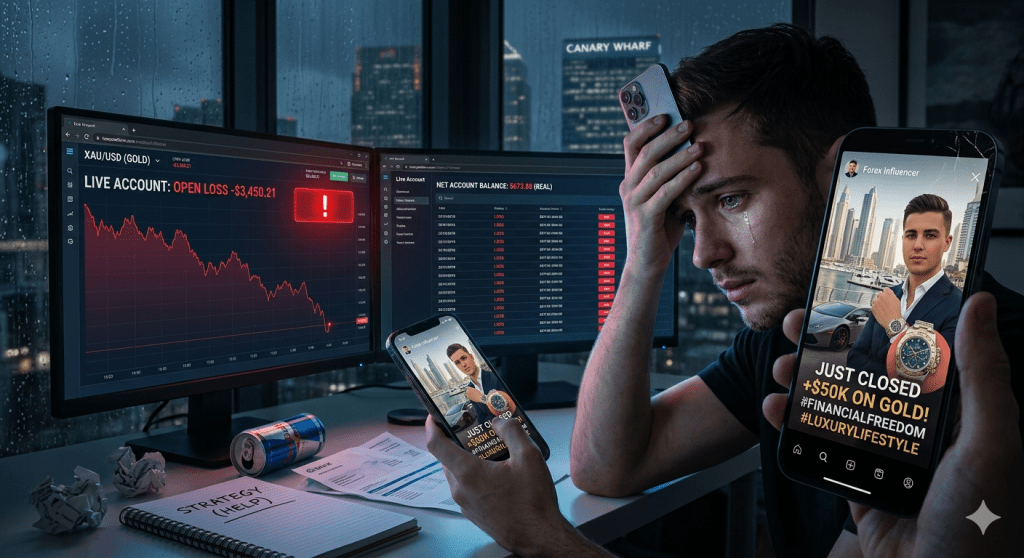
Social media has also created unrealistic expectations worldwide. Across countries like Nigeria, India, South Africa, the United Kingdom, Kenya, and the United States, many forex influencers constantly display luxury lifestyles, profit screenshots, expensive cars, and aggressive winning trades.
Very few show the emotional stress, blown accounts, sleepless nights, or months of losses behind the scenes.
As a result, many beginners enter forex expecting fast success. When they perform well on demo accounts but fail on real accounts, frustration quickly takes over.
What many traders eventually discover is this:
Demo accounts teach strategy.
Real accounts expose psychology.
And until traders develop emotional discipline, patience, and proper risk management, many will continue experiencing the same painful cycle: demo success, real-account losses, frustration, and doubt.
 tonybkofadps
Leave a comment